


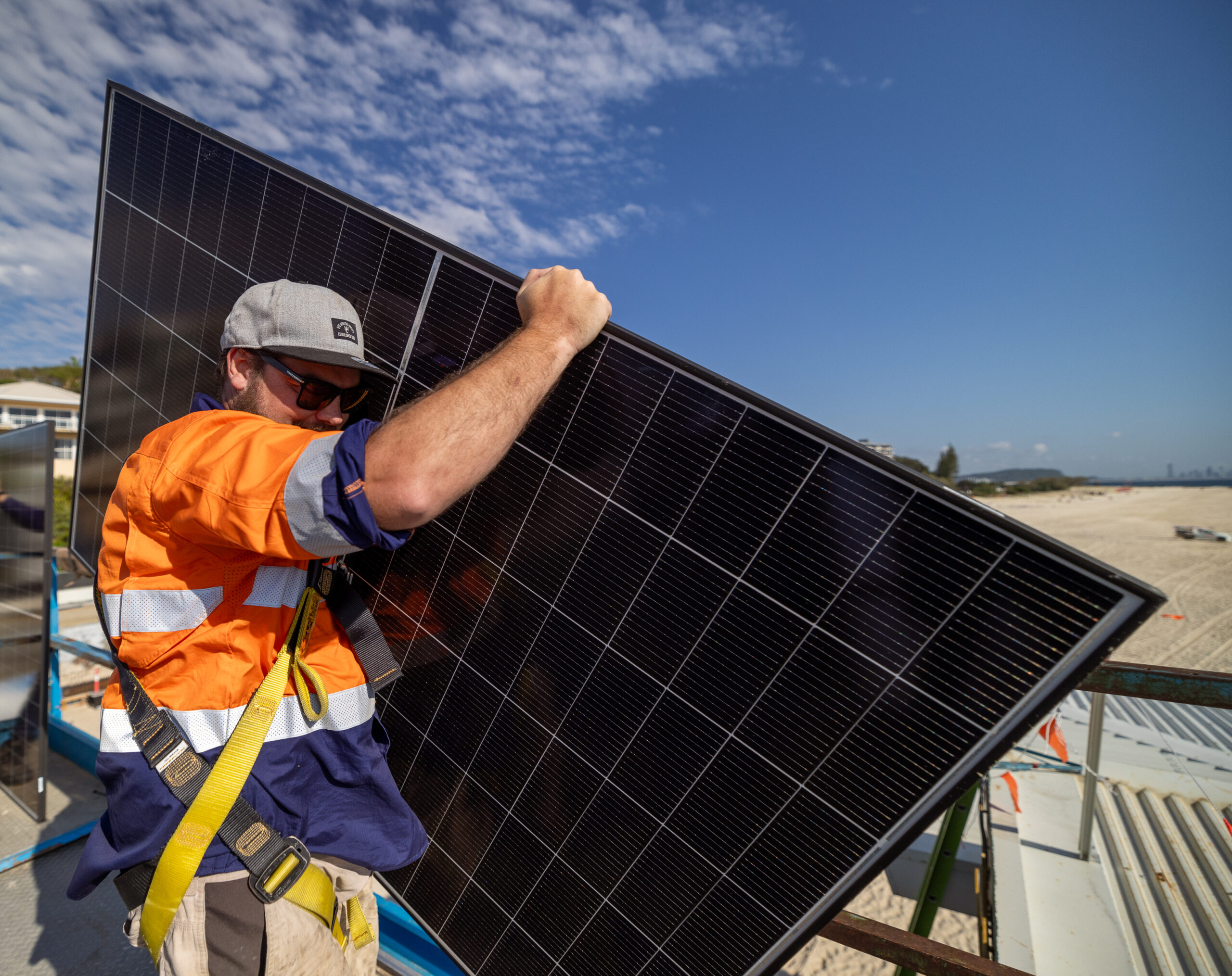

A 10kW solar system is the right size for a Gold Coast home that uses 25 to 40kWh of power a day, or plans to add a pool, an electric vehicle or a battery. Below that, a smaller system usually does the job for less. Solar Set designs and installs residential solar on the Gold Coast, and we size every system from your own numbers.
This guide shows you how to check your bill, your roof, your switchboard, your network connection and your quote before you sign. You will know whether 10kW fits your home or whether you should go smaller.
Key Points
- Independent estimates put a 10kW Gold Coast system at about 35kWh a day at the low end, and one estimate using 23 panels at 440W comes to about 15,480kWh a year.
- A 10kW system suits a home using 25 to 40kWh a day, while 6.6 to 8.8kW suits a home using 15 to 25kWh a day.
- Energex limits new systems on a fixed connection to exporting 5kW per phase, or nothing in congested areas, while a dynamic connection can export up to 10kW per phase with a 1.5kW minimum during restrictions.
- On single phase, a fixed connection caps solar and battery inverters at 10kVA combined, while a dynamic connection allows 10kVA of solar plus 10kVA of battery inverter.
- On the scheme rules we checked on 10 September 2026, a 10kW system in Zone 3 earns 69 STCs if installed in 2026 and 55 if installed from 1 January 2027.
How much power does a 10kW system make, and will it fit your roof?
A 10kW system on the Gold Coast makes about 35kWh a day at the low end of independent estimates. One estimate built on 23 panels at 440W comes to about 15,480kWh a year, with more in summer and less in winter.
Our Queensland solar sizing guide works on about 3.9kWh per kW per day and allows about 40 to 45m² of roof for 10kW.
A north-facing roof gives the most output. An east-west roof spreads generation into the morning and late afternoon, which suits a home that uses power at both ends of the day.
Tile takes longer to fit than a metal roof such as Colorbond, because the tiles need more care to work around. Either roof can carry 10kW if the clear area is there.
If your roof is small or shaded, a smaller array on the clear sections is usually the better answer than squeezing in 10kW. Adding a battery to that smaller array keeps more of its output in your home after dark.
Our in-house solar design and engineering team designs around awkward roofs. From SolarEdge optimisers, which let each panel work on its own, around the obstructions at The Rocks Resort in Currumbin, to Australian-made Tindo panels on a new Mudgeeraba home, we fit the system to the roof.
Fitting the array to the roof you have stops you paying for panels that cannot perform.
What daily use justifies a 10kW system?
A 10kW system suits a home using 25 to 40kWh a day, the band our residential page matches to 10 to 13.3kW. Your quarterly bill shows your daily average in kWh, and that number is the place to start.
Add what you plan to run in the next few years, because a pool or an electric vehicle raises your daily use. In Kingscliff, we installed a 13.3kW home solar system at the top of this band.
A battery changes the answer most, because it stores daytime solar for the evening. Our honest guide to whether a solar battery is worth it on the Gold Coast shows who gains and who does not.
Our solar and battery packages page shows what each package costs after the STC discount.
Run the go-smaller checks below before you accept a 10kW quote.
- Go smaller if your bill shows under 25kWh a day and you have no pool, electric vehicle or battery planned, because 6.6 to 8.8kW covers 15 to 25kWh a day.
- Go smaller if your roof cannot fit about 40 to 45m² of panels clear of shade.
- Go smaller if you are on a fixed single-phase connection, use little power during the day and have no battery plans, because your exports are held to 5kW.
- Rethink a 10kVA solar inverter if you want a battery on a fixed single-phase connection, because both inverters must share the 10kVA limit.
| Daily use | System size | Typical home |
|---|---|---|
| 10 to 15kWh | 5 to 6.6kW | Couple or small household |
| 15 to 25kWh | 6.6 to 8.8kW | 3 to 4 bedrooms, the most common fit |
| 25 to 40kWh | 10 to 13.3kW | 4 to 5 bedrooms, pool or ducted air |
What do Energex export and inverter limits mean for 10kW?
Energex lets you install 10kW of panels, but a fixed connection only lets you export 5kW per phase, or nothing in congested areas. Energex, the network that connects most Gold Coast homes, also says the main benefit of solar is self-consumption, meaning using your own power at home.
When your panels make more than your home is using plus the export cap, the inverter curtails the extra, which means it holds that output back. Running daytime loads such as a pool pump, EV charging or a hot water timer, or charging a battery, puts that power to work instead.
Your inverter turns the panels’ DC power into the AC power your home runs on, and its kVA rating sets how much it can deliver at once. On single phase, a fixed connection caps solar and battery inverters at 10kVA combined, so a smaller solar inverter leaves room for a battery inverter.
A dynamic connection lets Energex adjust your export limit as the network changes. It needs a compliant inverter and a Wi-Fi or ethernet link, and export falls back to about 1.5kW if that link drops.
South East Queensland has no regulated minimum feed-in tariff, so the power you use at home is worth more than the power you export.
Homes in Kingscliff, Tweed Heads and the Tweed are on the Essential Energy network, so these Energex limits do not apply there. If you live in our Northern NSW service area, we check your own network’s limits at your free assessment.
The right inverter and connection type let your 10kW system work the way it was designed to.
| Limit | Fixed connection | Dynamic connection |
|---|---|---|
| Export per phase | 5kW, or none in congested areas | Up to 10kW when the network has room, with a 1.5kW minimum during restrictions |
| Single-phase inverter limit | 10kVA of solar and battery combined | 10kVA of solar plus 10kVA of battery inverter |
Do you need an upgrade, and how does Energex approval work?
A 10kW system can need an upgrade, and only a check of your switchboard and supply will tell you. A large single-phase system can expose an older switchboard or service mains, the cables from the street to your home, that are too small for the load.
Three-phase power gives you more export room, because Energex sets its limits per phase. A three-phase home on a fixed connection can export 5kW on each phase.
Your installer applies to Energex for approval before the system goes on your roof. For a dynamic connection, the inverter must also be set up and connected online so Energex can send it export limits, and you should ask your installer for the current approval timeframe.
All switchboard, service mains and phase work is a job for a licensed electrician, never a DIY task. Our four switchboard checks before you sign a Gold Coast quote show what to look for.
Sorting these items before install day means no surprise variation on your quote.
How do STCs and battery rebates change from 1 January 2027?
Small-scale Technology Certificates (STCs) are a federal discount taken off your system price at the point of sale. Under the Clean Energy Regulator’s small-scale scheme, the number you receive falls each January, because it counts the years left until the scheme ends on 31 December 2030.
The scheme also gives each region a zone rating based on its sunshine. The Gold Coast, Brisbane and Northern NSW all sit in Zone 3.
On the scheme rules we checked on 10 September 2026, a 10kW system installed in 2026 earns 69 STCs, and the same system installed from 1 January 2027 earns 55. Our Gold Coast solar panel cost guide explains what each price buys.
Queensland has no state solar rebate for owner-occupiers. The federal Cheaper Home Batteries Program gives a point-of-sale discount on an eligible home battery, and it steps down every six months.
Our solar battery rebates page keeps the current figures for both schemes in one place.
Knowing the step-down dates lets you plan your install without being rushed into the wrong size.
What should be on your 10kW quote?
Your 10kW quote should name every part and every limit, so you can compare quotes like for like. Check for each item below before you sign.
- The quote names the panel model and the number of panels.
- The quote names the inverter model and its kVA rating.
- The quote says whether you will be on a fixed or a dynamic Energex connection.
- The quote states your export limit in kW.
- The quote lists any switchboard or service mains work.
- For a coastal home, the quote specifies marine-grade rail and stainless steel fixings, because salt corrodes ordinary fixings first.
- The quote separates the panel manufacturer’s performance warranty from the installer’s workmanship warranty, with the term of each written in.
Frequently Asked Questions
How many panels is a 10kW solar system?
A 10kW system is about 23 panels at 440W each. It needs about 40 to 45m² of roof, and shade or an east-west split changes how the panels are laid out.
Can I install 10kW of solar on single phase with Energex?
Yes, you can install 10kW of panels on single phase, but a fixed connection only exports 5kW per phase. A fixed connection also caps solar and battery inverters at 10kVA combined, while a dynamic connection allows 10kVA of solar plus 10kVA of battery inverter.
What happens when my 10kW system hits the export limit?
The inverter curtails the extra output, which means it holds back power your home cannot use or export. Running a pool pump, EV charging or a hot water timer during the day, or charging a battery, puts that power to work instead.
Do Energex limits apply in Kingscliff and Tweed Heads?
No, homes in Kingscliff, Tweed Heads and the Tweed are on the Essential Energy network, not Energex. We check your own network’s limits at your free assessment.
Should I install 10kW before the STC step-down?
Only if 10kW fits your daily use, because the right size matters more than the timing. On the scheme rules we checked on 10 September 2026, a 10kW system in Zone 3 earns 69 STCs in 2026 and 55 from 1 January 2027.
Find out if 10kW is the right size for your home
Book a free assessment and our own licensed team will size your system from your power bill, your roof, your switchboard and your network connection. Solar Set will tell you straight if a smaller system suits you better. Call 1300 330 923 or send us your details.
