



Choosing the right size solar system for your Queensland home can feel overwhelming, but it doesn’t have to be. With the right information about your energy usage, roof space, and future plans, you can make an informed decision that saves you money for decades to come.
This comprehensive guide breaks down everything Queensland homeowners need to know about solar system sizing.
Key Points: Sizing Your System
- Queensland’s climate increases summer consumption by 30-50% due to air conditioning
- EVs add 2,000-4,000 kWh annually (equivalent to 1-2 extra people)
- Pools can increase consumption by 20-30% of total household use
- Need ~20m² roof space per 5kW of solar capacity
- Self-consumption worth 2-3x more than feed-in tariff export; Regional QLD feed-in tariff: 8.66c/kWh (2025-26); Retail electricity: 26-33c/kWh
- Focus sizing on daytime consumption, not maximum export
Understanding Your Current Energy Usage
The foundation of proper solar sizing starts with understanding how much electricity your household actually uses. In Queensland, energy consumption varies significantly based on household size, climate zone, and lifestyle factors.
2-3 Person Household
A 2 or 3-person household in Queensland is estimated to be consuming around 5,650 kWh of electricity annually. This translates to approximately 15.5 kWh per day.
These smaller households typically have lower baseline consumption but may still use significant energy for air conditioning during Queensland’s hot summers.
Families
Larger families consume considerably more energy, typically using between 20-25 kWh per day (7,300-9,100 kWh annually).
The increased consumption comes from additional appliances, more frequent use of air conditioning, hot water systems, and general household electronics.
Queensland’s Climate Impact
Queensland’s tropical and subtropical climate significantly influences energy consumption patterns.
Queensland is fairly lucky in this regard — its tropical climate with humid summers and warm winters means households here can save on heating bills in the winter, but rely more heavily on cooling systems during summer.
This creates seasonal variations in energy use, with summer months often seeing 30-50% higher consumption due to air conditioning.
Planning for Future Energy Needs
One of the most common mistakes in solar sizing is only considering current energy use. Smart homeowners plan for future consumption increases that could significantly impact their solar requirements.
Electric Vehicle (EV) Charging
EV adoption is accelerating rapidly, and charging at home can substantially increase your energy consumption.
A typical EV might consume around 15-30 kWh per 100 kilometres driven, depending on the model and driving conditions.
For average Australian driving patterns (around 13,000km annually), this could add 2,000-4,000 kWh to your annual consumption – equivalent to adding another 1-2 people to your household energy use.
Pool Heating and Equipment
Swimming pools are popular in Queensland’s climate, but they can dramatically increase energy consumption.
Pools can account for about 20% to 30% of a household’s total energy consumption, with energy usage primarily driven by the pool pump.
Pool heating systems can add another 3,000-6,000 kWh annually, while pumps and filtration systems contribute an additional 1,500-3,000 kWh per year.
Other Future Considerations
Consider these potential future energy increases when sizing your system:
- Home additions or renovations: Extra rooms mean more lighting, air conditioning, and appliances
- Work-from-home arrangements: Increased daytime electricity use for home offices
- Electric appliances: Replacing gas hot water, heating, or cooking with electric alternatives
- Family changes: Growing families or aging parents moving in
How Roof Size and Shape Impact System Size
Your roof’s physical characteristics play a crucial role in determining your maximum solar capacity, regardless of your energy needs.
Available Roof Space
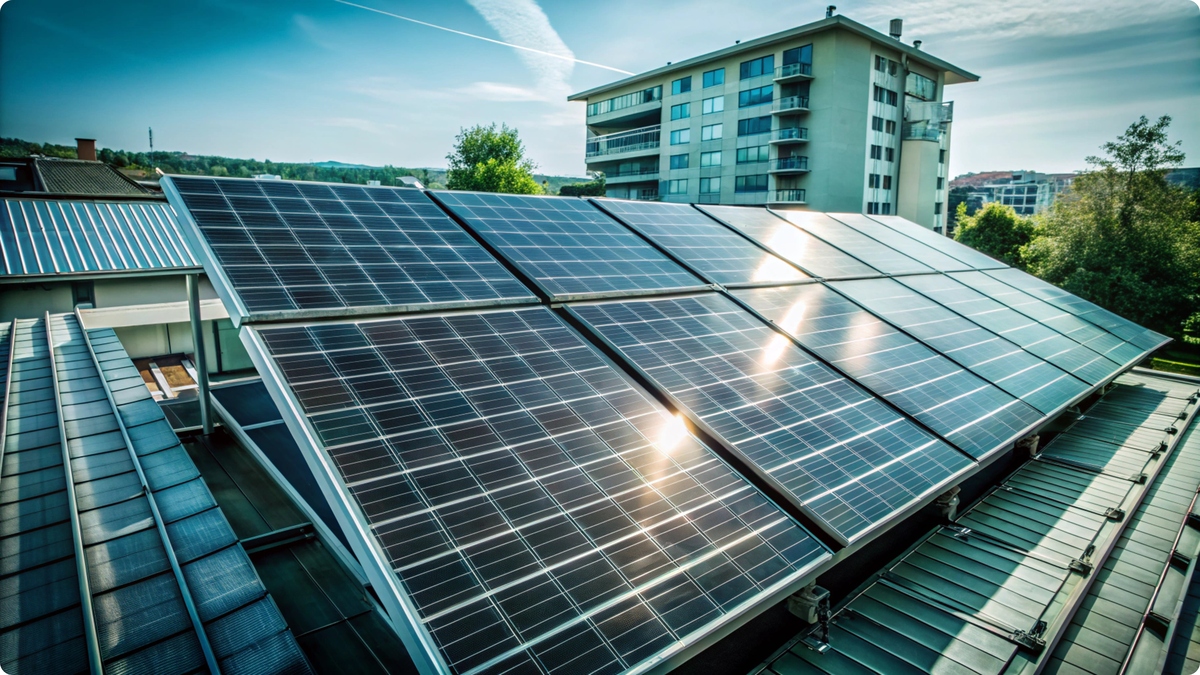
A standard residential solar panel (around 440-500W) typically measures about 2m² including spacing. This means you need roughly 20m² of suitable roof space for every 5kW of solar capacity. Most Queensland homes can accommodate between 6.6kW and 13kW systems, depending on roof size and layout.
Roof Orientation and Tilt
In Queensland, north-facing panels generate the most electricity throughout the year. However, east and west-facing panels can be highly effective, especially for households with morning or evening energy consumption patterns.
East-west split systems are becoming increasingly popular as they provide more consistent generation throughout the day.
Shading and Obstacles
Chimneys, vents, satellite dishes, and neighboring trees can all reduce your effective roof space.
Even partial shading on one panel can significantly impact the performance of the entire string if not properly managed with power optimisers or micro-inverters.
Roof Condition and Age
Your roof needs to be structurally sound and relatively new.
If your roof requires replacement within the next 10-15 years, it’s often more cost-effective to do this before installing solar to avoid removal and reinstallation costs.
The Risks of Getting System Size Wrong
Sizing your solar system incorrectly can have long-term financial consequences that persist for the 25+ year life of your system.
Undersizing Risks
Higher electricity bills
If your system doesn’t generate enough electricity to meet your needs, you’ll continue paying high retail rates for grid electricity. With Queensland electricity prices ranging from 26 to 33 cents per kilowatt-hour (kWh), this can add up quickly.
Missed savings opportunity
A system that’s too small means you’re not maximizing the roof space you have available. Since the cost per kW decreases with larger systems due to economies of scale, you might actually save money by installing a larger system upfront.
Future expansion challenges
Adding to an existing solar system later is typically more expensive per kW than installing a larger system initially. You may also face technical challenges if your inverter capacity is already maxed out.
Oversizing Risks
Higher upfront costs
While larger systems have better economies of scale, there’s a point where you’re paying for generation capacity you don’t need.
Lower return on investment
If you’re exporting large amounts of electricity at low feed-in tariff rates, your payback period extends significantly.
Grid connection limits
Most residential properties in Queensland have a 10kW inverter limit for single-phase connections, which can restrict your system size regardless of roof space.
How Feed-in Tariff Policy Affects System Size Choices
Queensland’s feed-in tariff landscape has changed dramatically over the years and significantly impacts optimal system sizing decisions.
Current Feed-in Tariff Rates
The regional Queensland feed-in tariff is set at 8.66 cents per kilowatt-hour for the 2025-2026 Financial Year, down from 12.377c in 2024-25. In South East Queensland, competitive market rates typically range from 3-10 cents per kWh, depending on your retailer and plan.
Self-Consumption vs Export
With retail electricity rates at 26-33 cents per kWh and feed-in tariffs at 3-12 cents per kWh, the financial benefit of using your solar electricity directly is 2-3 times greater than selling it back to the grid. This creates a strong incentive to size your system based on your daytime consumption patterns rather than simply maximizing export.
Strategic Sizing for Feed-in Tariffs
For high daytime usage households: Size your system to meet most of your daytime consumption with minimal export. This typically means a 6.6-10kW system for most families.
For low daytime usage households: Consider a smaller system (5-8kW) unless you have specific plans to increase consumption through EVs, pools, or battery storage.
Battery storage considerations: If you’re planning to add battery storage, you might size your solar system larger to charge batteries during the day and minimize grid exports.
Putting It All Together: A Practical Sizing Approach
Here’s a step-by-step approach to determine your optimal system size:
Step 1: Analyse Your Energy Bills
Review 12 months of electricity bills to understand your annual consumption and seasonal patterns. Look for your average daily kWh usage and identify your highest consumption months.
Step 2: Calculate Future Needs
Add anticipated increases for EVs (2-4kWh per day), pools (5-15kWh per day), or other major appliances. Consider a 20-30% buffer for unexpected increases.
Step 3: Assess Your Roof
Measure available north, east, and west-facing roof space. Account for shading, obstacles, and local council setback requirements.
Step 4: Consider Your Consumption Profile
If you use most electricity during the day, you can install a larger system. If most consumption occurs in the evening, focus on meeting daytime baseload with a smaller system.
Step 5: Evaluate Financial Factors
Compare the cost per kW of different system sizes and calculate payback periods based on your specific usage patterns and local feed-in tariff rates.
Step 6: Plan for Technology Integration
If you’re considering batteries, smart home technology, or time-of-use tariffs, factor these into your sizing decision.
Queensland-Specific Recommendations
Based on current market conditions and Queensland’s unique circumstances:
2-3 person household
6.6kW system typically optimal, scaling to 8-10kW if planning for EV or pool
Family of 5
10-13kW system, depending on daytime usage patterns and roof capacity
Investment properties
Focus on tenant usage patterns and roof space optimization
Retirement planning
Consider larger systems if you’ll be home more during the day
Sizing your solar system correctly requires balancing current needs, future plans, roof constraints, and financial considerations. While Queensland’s generous sunshine hours make solar an excellent investment, the declining feed-in tariffs mean strategic sizing for self-consumption is more important than ever.
Take time to analyze your specific situation thoroughly, and don’t hesitate to get quotes from multiple reputable installers who can provide detailed generation modeling for your specific roof and location. Remember, a well-sized solar system is an investment that will pay dividends for 25+ years, so getting it right from the start is crucial for maximizing your returns.
Always consult with Clean Energy Council accredited installers who can provide detailed modeling specific to your property and circumstances. This guide provides general information only and shouldn’t replace professional assessment of your individual needs.

Holly Charters
Solar Set | Built for the long run. Not the quick win.
FAQs – Sizing Solar
What size solar system do I need for a 4-bedroom house in Queensland?
For a typical 4-bedroom house with 3-5 occupants, a 10-13kW system is usually optimal.
However, the number of bedrooms matters less than your actual energy consumption, daytime usage patterns, and future plans (EVs, pools, etc.).
Check your electricity bills for your daily kWh usage to get a more accurate estimate.
Is it better to oversize or undersize my solar system?
Generally, slight oversizing is preferable to undersizing, provided you have adequate roof space and stay within grid connection limits.
Undersizing means ongoing high electricity bills, while modest oversizing provides growth buffer and better economies of scale.
However, significant oversizing with low feed-in tariff rates reduces your return on investment.
How much roof space do I need for a 10kW solar system?
You’ll need approximately 40-45m² of suitable roof space for a 10kW system, including required spacing around panels.
This space should ideally face north, east, or west with minimal shading from trees, buildings, or roof obstacles.
Should I size my system based on my summer or winter electricity usage?
Base your sizing on annual average usage, but weight it toward your higher consumption months.
Queensland’s summer air conditioning loads significantly increase usage, so factor in these peaks.
A system sized for winter consumption alone will likely leave you with high summer bills.
Can I add more panels to my solar system later?
While technically possible, expanding an existing system is typically more expensive per kW than installing a larger system initially.
You may also face technical constraints if your inverter is already at capacity, requiring a complete inverter upgrade.
How does battery storage affect solar system sizing?
If you’re planning to add batteries, you might size your solar system 20-30% larger to charge the batteries during the day while still meeting your household consumption.
This reduces reliance on evening grid electricity and minimizes low-value exports.
What's the maximum solar system size I can install in Queensland?
For single-phase residential connections, the standard limit is 10kW of inverter capacity (though you can have more panels).
Three-phase connections allow larger systems. Some networks have specific limitations, so check with your distributor (Energex, Ergon, or Essential Energy).
How do time-of-use electricity tariffs affect solar sizing?
Time-of-use tariffs make self-consumption even more valuable, as peak rates (typically 4-9pm) can exceed 50c/kWh.
If you’re on or considering these tariffs, size your system to maximise daytime consumption and consider battery storage for evening peak periods.
Should I consider my neighbors' trees when sizing my solar system?
Absolutely. Even partial shading can significantly reduce system performance.
Consider both current shading and potential future growth of vegetation. If shading is unavoidable, power optimizers or microinverters can minimize the impact, though they add to system cost.
How accurate are online solar calculators for Queensland homes?
Online calculators provide useful estimates but can’t account for your specific roof orientation, shading, local weather patterns, and consumption profile.
They’re a good starting point, but professional on-site assessment and detailed modeling by accredited installers will give much more accurate projections.
