



If you’re considering solar power for your Gold Coast home, you’ve probably heard about solar panels and batteries. But there’s another crucial component that often gets overlooked: the solar inverter. Think of it as the translator between your solar panels and your home – without it, all that sunshine hitting your roof can’t power your kettle, air conditioner, or any other appliance.
Key Points
- Solar inverters convert DC electricity from panels into 240V AC power your home can use
- String inverters are the most common and cost-effective option for simple roof layouts
- Microinverters cost more upfront but offer better performance for complex roofs and last up to 25 years
- All inverters must be Clean Energy Council (CEC) approved to qualify for government rebates
- Gold Coast’s hot, humid climate requires careful consideration of inverter placement and weather protection
Let’s break down everything you need to know about solar inverters in plain English, so you can make an informed decision about your solar investment.
What Exactly Is a Solar Inverter?
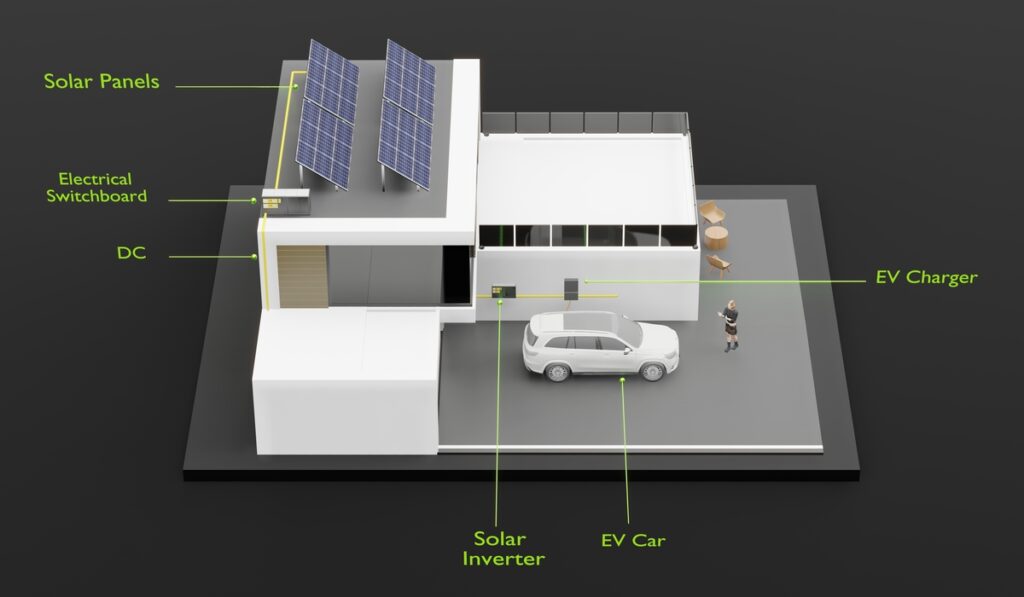
A solar inverter is the hardworking device that converts the electricity your panels generate into power your home can actually use. Here’s why that matters: your solar panels produce Direct Current (DC) electricity – the same type of power you’d find in a battery. But your home runs on Alternating Current (AC) electricity at 240 volts, which is what comes from the grid.
The inverter bridges this gap. Without it, all that clean energy from your panels would be completely useless for running your household appliances.
How Do Solar Inverters Actually Work?
The science is fascinating but straightforward. When sunlight hits your solar panels, it energizes semiconductor materials inside them (typically crystalline silicon), causing electrons to break free and flow as DC electricity. This power travels down to your inverter, where some clever electronics go to work.
The inverter contains components called transistors that rapidly switch on and off, running the DC current through a transformer in a way that converts it to 240V AC power – the exact type your home needs. Think of it like a high-speed power converter that’s constantly working to keep your home running on solar energy.
Types of Solar Inverters: Which One Is Right for Your Gold Coast Home?
Not all inverters are created equal, and the right choice for your neighbor might not be the best fit for your home. Here are the main options available in Australia:
String Inverters: The Popular Choice
String inverters are by far the most common option for Gold Coast homes, and for good reason. They’re cost-effective, reliable, and get the job done for most installations.
How they work: Your solar panels are connected together in “strings” (like Christmas lights), and these strings feed into one inverter mounted on your wall, usually near your switchboard.
Best for: Homes with simple roof layouts where all panels face the same direction and receive similar amounts of sunlight throughout the day.
The catch: If your roof has multiple sections with different angles, or if some panels are shaded by trees while others aren’t, a string inverter might not give you optimal performance. That’s because all panels in a string work at the efficiency level of the lowest-performing panel.
Lifespan: Typically 10-15 years, which means you’ll likely need to replace it at least once during your solar panels’ 25+ year lifespan.
Microinverters: The Premium Option
Microinverters take a completely different approach – instead of one big inverter on your wall, you have tiny inverters (about the size of a paperback book) attached under each solar panel on your roof.
How they work: Each panel operates independently, converting its DC power to AC right there on the roof.
Best for: Complex roof layouts with panels facing different directions, or homes with partial shading issues (like that big tree you’re not ready to trim just yet).
The advantages: If one panel or microinverter has an issue, the rest of your system keeps working normally. You also get detailed monitoring data for each individual panel, which can be helpful for spotting problems early.
The investment: Microinverter systems cost more upfront – typically several hundred to over a thousand dollars more than string inverter systems. However, many come with warranties up to 25 years, potentially outlasting your panels.
Hybrid Inverters: Planning for Batteries?
If you’re installing solar and a battery system at the same time, a hybrid inverter might be your best bet.
How they work: These clever devices combine the functions of both a solar inverter and a battery inverter in one unit, managing power flow from your panels, to your battery, to your home, and back to the grid.
Best for: New installations where you want solar and battery storage from day one. They create what’s called a “DC-coupled” system, which is more efficient than adding a separate battery inverter later.
Important note: Hybrid inverters can’t work with microinverters or with batteries that have integrated inverters built in. It’s an either-or situation.
Power Optimisers: The Middle Ground
Think of power optimisers as a compromise between string inverters and microinverters. You still have one main string inverter on your wall, but you add small optimiser units under each panel on the roof.
How they work: The optimisers allow each panel to work independently (like microinverters), but they don’t do the actual DC-to-AC conversion – that still happens at your main inverter.
Best for: Homes that would benefit from panel-level optimization but want to keep costs more reasonable than a full microinverter system.
The sweet spot: Generally cheaper than microinverters while still addressing many of the same issues with complex roof layouts and shading.
What Makes a Good Solar Inverter? Your Gold Coast Buying Guide
When you’re comparing inverters, here’s what actually matters:
CEC Approval: Non-Negotiable
Your inverter must be on the Clean Energy Council’s approved list. This isn’t just red tape – it’s your guarantee that the inverter meets Australian safety standards and can handle our climate. More importantly, systems with non-approved inverters won’t qualify for government rebates, which could cost you thousands.
Getting the Size Right
Here’s a simple rule: your inverter capacity (measured in kilowatts) should match or slightly exceed your solar panel output. Installing a 6.6kW solar system? You’ll typically pair it with a 5kW inverter (this slight “oversizing” of panels is actually standard practice and approved by Australian regulations).
Efficiency Ratings Matter
Look for string inverters with at least 93% efficiency, or 95% for transformerless models. What does this mean in real terms? A 95% efficient inverter loses only 5% of your solar power in the conversion process. Over 25 years, that difference adds up to real dollars in your pocket.
Warranty Length Speaks Volumes
Standard inverter warranties range from 5-12 years, with many manufacturers offering paid warranty extensions. Given that string inverters typically last 10-15 years, a longer warranty provides peace of mind. Some premium inverters and most microinverters now offer 20-25 year warranties, which can outlast your panels.
Weather Protection: Gold Coast Edition
Here’s something that matters specifically on the Gold Coast: our climate can be brutal on electronics. Hot, humid summers and the occasional severe storm mean your inverter’s location and weather protection are crucial.
String inverters should never be installed in direct sunlight – they’ll overheat and their lifespan will plummet. A shaded, well-ventilated wall location is ideal. If that’s not possible, you might need a weatherproof enclosure, which is an extra cost worth considering upfront.
Microinverters are designed to sit under panels on the roof, so they’re built to handle the elements better, but Queensland’s heat can still take a toll over time.
Single-Phase vs Three-Phase: Know Your Home
Most Gold Coast residential homes have single-phase power, which means you’ll need a single-phase inverter. Some larger homes or properties with workshops might have three-phase power.
If you have three-phase power, you can choose either a single-phase or three-phase inverter. A three-phase inverter costs more but allows for a larger system and higher export limits (which matters if you plan to sell a lot of power back to the grid).
Not sure which you have? Check your switchboard or ask your installer – they’ll know immediately.
Monitoring and Smart Features
Modern inverters are incredibly smart, offering monitoring through apps, web portals, or display screens. Depending on your inverter, you might be able to track:
- Real-time power generation (right now, your panels are producing X kilowatts)
- Daily, monthly, and lifetime energy production
- System health and any issues that need attention
- Individual panel performance (with microinverters or optimisers)
Some systems integrate with home energy management platforms, letting you see not just what you’re generating, but how you’re using it. This visibility can help you shift energy-hungry tasks (like running the pool pump or doing laundry) to when the sun’s shining.
What Should You Actually Pay?
This is where we give you the honest truth: inverter prices vary wildly, from around $800 for a basic string inverter up to $5,000 or more for premium hybrid inverters or large microinverter systems.
Here’s our straight-up advice: never buy the cheapest option. That bargain-basement inverter will cost you more in the long run when it fails years early and needs replacing. At the same time, the most expensive isn’t always necessary for your situation.
A good quality string inverter for an average Gold Coast home (5-6.6kW system) typically falls in the $1,500-$2,500 range installed. Microinverter systems might add $1,000-$2,000 to your total system cost. Hybrid inverters generally sit somewhere between standard string and full microinverter systems.
Remember, your inverter is part of a package. When comparing quotes, look at the total system price and what’s included, not just the inverter cost alone.
Common Gold Coast Inverter Questions
Can I add a battery later if I don’t get one now?
Absolutely. If you start with a standard string inverter or microinverters, you can add a battery system down the track by installing a battery inverter alongside your existing equipment (this is called an AC-coupled system). You don’t need a hybrid inverter to add batteries later – though if you know you want batteries within a few years, a hybrid might make sense from day one.
Will my inverter need replacing during my panels’ lifetime?
Probably. Most string inverters last 10-15 years, while quality solar panels are warrantied for 25 years and can produce power for 30+ years. Plan on replacing a string inverter once, possibly twice, during your system’s life. This is normal and expected – not a design flaw. Microinverters with 25-year warranties might last as long as your panels.
What happens if my inverter fails?
First, check if it’s under warranty. If it is, your installer should organize the repair or replacement at no cost to you. If it’s out of warranty, you’ll need to pay for a replacement, but the good news is that inverter technology improves constantly, so your replacement will likely be better and cheaper than your original unit.
Do I need to clean or maintain my inverter?
Not really. String inverters need to stay free of dust and debris (make sure air vents aren’t blocked), but they’re largely maintenance-free. Microinverters on the roof require no maintenance from you. The most important “maintenance” is simply keeping an eye on your monitoring system and making sure your production looks normal.
Can I expand my system later?
It depends on your inverter and your initial system design. Some inverters have spare capacity or additional inputs that allow you to add more panels later. Others don’t. If you think you might want to expand in the future, discuss this with your installer before you commit – they can design the system accordingly.
The Bottom Line for Gold Coast Homeowners
Your solar inverter might not be the flashiest part of your solar system, but it’s absolutely critical. Here’s what to prioritise:
- Choose an installer who discusses inverter options with you, not one who just quotes a single package without explanation
- Verify CEC approval for any inverter you’re considering
- Match the inverter type to your roof – complex layouts benefit from microinverters or optimisers, simple roofs work great with string inverters
- Consider the Gold Coast climate – heat and humidity are hard on electronics, so installation location matters
- Budget for replacement – especially with string inverters, factor in the likelihood of replacing it once during your panels’ lifetime
- Don’t skimp on quality – a cheap inverter is never a bargain if it fails early
- Think about batteries – even if you’re not getting one now, consider how your inverter choice might affect future upgrades
The right solar inverter will quietly do its job for years, converting Queensland sunshine into power for your home and savings in your pocket. The wrong one becomes a headache and an unexpected expense. Take the time to understand your options, ask questions, and choose wisely.
Ready to explore solar options for your Gold Coast home?
Make sure whoever you talk to walks you through inverter choices as part of the package – it’s a sign they’re focused on getting you the right system, not just any system.
Holly Charters
Solar Set | Built for the long run. Not the quick win.
Frequently Asked Questions About Solar Inverters
What is DC and AC electricity?
DC (Direct Current) is electricity that flows in one direction, like water through a pipe. It’s the type of power produced by solar panels and stored in batteries. AC (Alternating Current) is electricity that rapidly switches direction (50 times per second in Australia), and it’s what the electrical grid provides and what your home appliances need to operate.
What is CEC approval and why does it matter?
The Clean Energy Council (CEC) is Australia’s peak body for clean energy. Their approved product list ensures that solar inverters meet Australian safety standards, quality benchmarks, and are suitable for our climate conditions. Only systems with CEC-approved components qualify for government solar rebates through the Small-scale Renewable Energy Scheme (SRES). You can check if an inverter is approved on the CEC’s approved inverter list.
What does "kilowatt" (kW) mean when talking about inverters?
A kilowatt (kW) is a measure of power capacity. A 5kW inverter can handle up to 5,000 watts of power at any given moment. For context, a typical air conditioner uses about 2-3kW when running, while a kettle uses about 2kW. Your inverter’s kW rating should match or slightly exceed your solar panel system’s output.
What is a string in solar terminology?
A string refers to a group of solar panels wired together in series, similar to how Christmas lights are connected. In a string inverter system, multiple panels are connected into one or more strings that feed into a single inverter unit.
What does AC-coupled and DC-coupled mean for battery systems?
DC-coupled systems connect the solar panels and battery on the DC side of the system, typically using a hybrid inverter. This is more efficient as the solar power only gets converted once. AC-coupled systems have separate inverters for solar and batteries, with both connecting on the AC (household electricity) side. This setup allows you to add batteries to existing solar systems without replacing your current inverter. accordingly.
What is a smart meter?
A smart meter is a digital electricity meter that records your power usage in 15 or 30-minute intervals and sends this data automatically to your electricity retailer. If you install solar in Queensland, you’ll need a smart meter to track both your electricity consumption from the grid and your solar exports back to the grid. Most electricity retailers install these for free, though there may be charges if your switchboard needs upgrading.
What does "export" mean in solar terms?
Export refers to the excess solar electricity your system sends back to the electricity grid when you’re generating more power than you’re using. You typically receive a feed-in tariff (payment) from your retailer for exported electricity, though this rate is usually much lower than what you pay to import electricity from the grid.
What are network export limits?
Network export limits are restrictions set by your local electricity network on how much solar power you can send back to the grid. On the Gold Coast, Energex (the network operator) may limit exports to prevent grid overload in areas with high solar uptake. These limits can affect your inverter sizing decisions, and some modern inverters have export limiting functions built in to comply with these restrictions.
What is inverter efficiency and why does it matter?
Inverter efficiency measures how much of the DC power coming from your panels actually gets converted to usable AC power. A 95% efficient inverter means 5% of your solar energy is lost as heat during conversion. Over a system’s 25+ year lifetime, even a few percentage points of efficiency difference can mean hundreds of dollars in lost electricity production. According to Australian Government energy guidance, grid-connected inverters should have minimum efficiency of 93% for transformer-based models or 95% for transformerless models.
What is the difference between single-phase and three-phase power?
Single-phase power is the standard electricity supply for most residential homes, providing power through 3 wires. Three-phase power uses 5 wires and provides more electricity capacity, typically found in larger homes or properties with workshops. Your inverter must match your home’s electricity supply type. If you’re unsure which you have, your solar installer can check your switchboard or meter box to confirm.
